Connect With Our On-Demand Arabic Interpreters
Professional Arabic interpreters available 24/7 by phone or by video to support your organization.
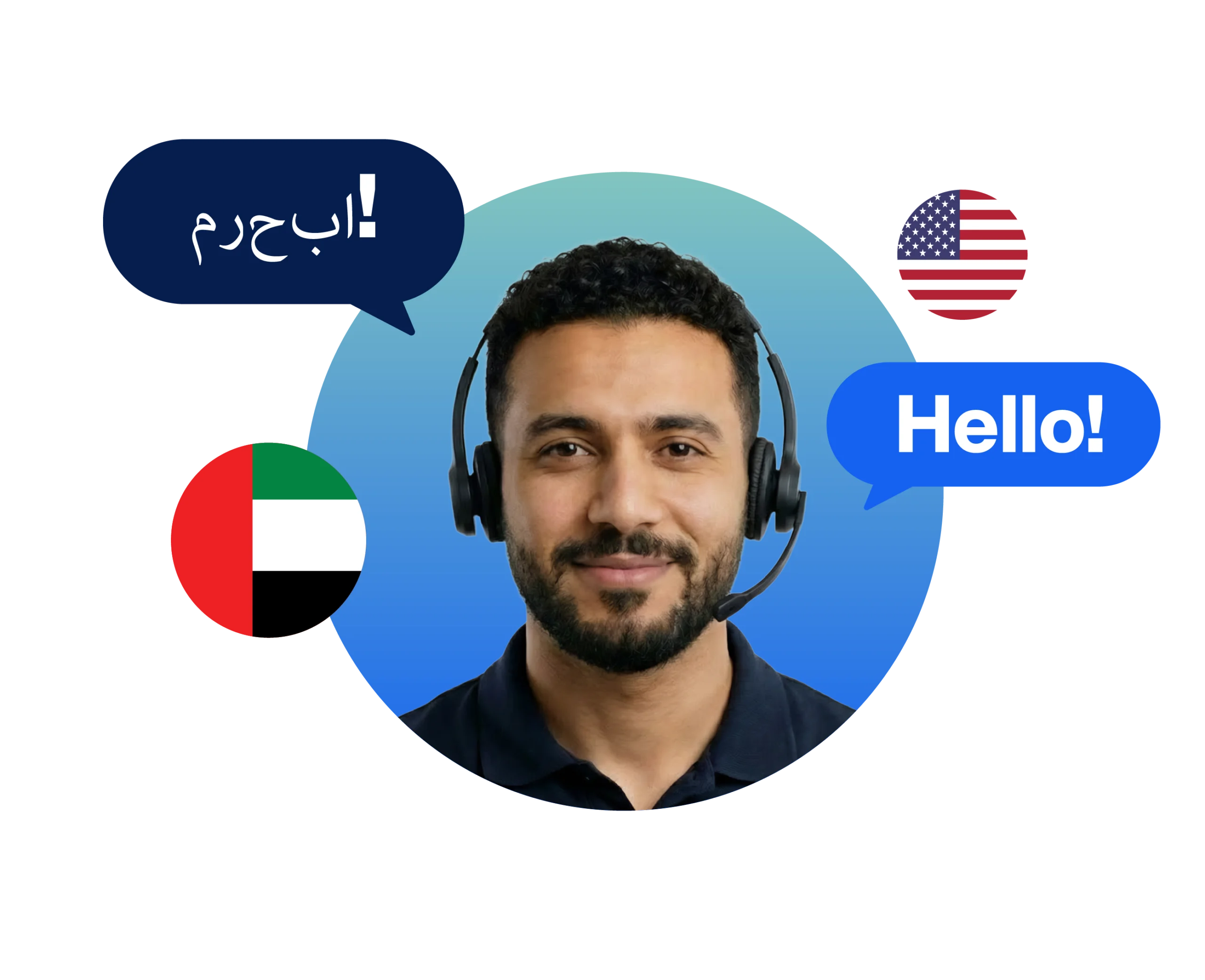
Why Arabic Interpretation Matters
Arabic is one of the fastest-growing language populations in the United States, spoken primarily by immigrants, refugees, and long-standing communities across the country. Boostlingo helps your organization understand everyone, provide access without anxiety, and run an efficient language access program that supports every interaction.


1.4 million Arabic Speakers
There are approximately 1.4 million Arabic speakers in the United States, with around 400 million speakers worldwide.
Compliance Requirements
According to Title VI, ACA, and CLAS standards, federally funded organizations must provide access to interpreting for Limited English-proficient (LEP) speakers.
Critical Language Status
According to the Critical Language Scholarship (CLS), Arabic is a critical language in the United States, making it important for economic competitiveness, strategic interests, and national security.

On-Demand Arabic Interpreting
Boostlingo’s platform provides a quick and simple way to connect with Arabic language interpreters within seconds, regardless of your industry.
- Select Arabic from the language menu in the Boostlingo app.
- Choose your specialty: Medical, Legal, Community, or other industry domain.
- Pick phone (OPI) or video (VRI) and get connected to a professional interpreter in seconds.
No delays. No manual routing.
Just reliable, on-demand Arabic interpreting for every workflow.
Why Boostlingo?
Connection Times
Connect to an Arabic interpreter in under 20 seconds, every time.
Interpreter Network
Access a global network of more than 700 Arabic interpreters.
Dialect Specialization
Work with an interpreter who specializes in different Arabic dialects.
Consistent Fill Rates
Maintain consistent access with an average fill rate of 92% across high-demand moments.
See How Arabic Interpreting Works for Your Organization
Learn how Boostlingo’s Arabic interpreting services support your staff, workflows, and Arabic-speaking communities.
Four Ways to Connect to Arabic Interpreters
Select the interpreting method that best supports your workflow, environment, and the Arabic-speaking communities you serve. Boostlingo offers blended pricing and a single platform to keep costs low and usage easy.

Video Remote Interpreting (VRI)
Connect with a video interpreter when facial cues matter. These are often essential for Arabic communities, where non-verbal communication plays a major role.

Over-the-Phone Interpreting (OPI)
Connect with an Arabic interpreter over the phone. A solution for call centers, fast triage, scheduling, and high-volume environments.

AI Interpreting
A scalable option for low-risk and low-complexity exchanges with the ability to quickly switch to a human interpreter when accuracy, nuance, and cultural sensitivity is required.

Live Event Interpreting (RSI)
Work with an Arabic conference interpreter to bridge language gaps during multilingual events, conferences, community gatherings, and international business calls.
Arabic Interpreter Qualifications
Arabic interpreters at Boostlingo meet strict standards to help you stay compliant and serve limited-English proficient (LEP) clients.
- Minimum 3 years of experience
- Documented proof of language proficiency
- Completed ‘Boostlingo Badge’ for remote interpreting readiness
- 40-hour training for medical and legal qualified interpreters
- Annual HIPAA and Fraud, Waste, and Abuse training
- Expertise in different Arabic dialects
Learn more about our interpreter quality and qualifications.

The Arabic Dialects We Specialize In
Boostlingo’s interpreters specialize in the following Arabic dialects, allowing organizations to connect with different communities:
- • Modern Standard Arabic (MSA/Fusha)
- • Egyptian Arabic (Masri)
- • Iraqi Arabic (Mesopotamian Arabic)
- • Syrian Arabic (Levantine Arabic)
- • Algerian Arabic (Dziria/Darja)
- • Moroccan Arabic (Darija)
- • Sudanese Arabic (Sudanese)
- • Yemeni Arabic
- • Chadian Arabic (Shuwa Arabic, Western Sudanic Arabic, or West Sudanic Arabic)
- • Judeo-Iraqi Arabic (Yahudic)
- • Lebanese Arabic (Lebanese)
Understanding the Differences
Many people confuse Arabic, Dari, Pashto, and Farsi because these languages are historically connected and spoken across overlapping regions. In reality, they are distinct languages with different alphabets, grammar systems, and cultural contexts – and they require separate, professionally trained interpreters to ensure accuracy.
Arabic
Arabic is spoken across the Middle East and North Africa and includes major dialect groups such as Egyptian, Levantine, Gulf, Iraqi, and Maghrebi. It uses the Arabic script and is not mutually intelligible with Farsi, Dari, or Pashto.
Dari
One of the two official languages of Afghanistan, it is closely related to Farsi, with speakers often understanding each other. However, Dari uses a different vocabulary, pronunciation, and regional phrasing that require Dari-trained interpreters.
Pashto
Another official language of Afghanistan, Pashto is also primarily used in parts of Pakistan, and is not intelligible with Dari or Farsi, despite sharing some historical roots. Pashto uses the Pashto alphabet and has multiple dialects, including Northern, Southern, and Central Pashto.
Farsi
Farsi is the official language of Iran and is related to Dari, though they differ in pronunciation, loanwords, and daily usage. Farsi can often understand Dari speakers to some degree, but not Arabic or Pashto.
Support Arabic Speakers With Confidence
See how Boostlingo helps organizations deliver clear communication, meet language access requirements, and serve Arabic speakers effectively.
Why Other Interpreting Solutions Fall Short
Many Arabic-interpreting solutions promise support, but fall short when it matters most. Here’s how Boostlingo delivers where others don’t:
Other Solutions:
- Long wait times for interpreters
- Inconsistent interpreter availability and quality
- Slow, manual processes that delay connections
- Difficulty meeting demand during peak hours
- Hard for staff to learn or integrate into existing workflows
- Minimal product support when issues arise
Boostlingo:
- Fast, reliable on-demand connections
- Streamlined digital workflows that reduce delays
- Consistent interpreter access to keep operations moving
- The scale to support organizations of any size, at any time
- A simple, modern platform built for ease of use
- Industry-leading customer support and responsiveness
Industry Specialization
Work with professional Arabic interpreters who understand your industry and the terminology you use.

Arabic
Medical Interpreters
Support intake, informed consent, and telehealth in areas with large Arab-speaking populations, like California, Michigan, and New York.
Arabic
Legal Interpreters
Support civil litigation, court appearances, depositions, immigration cases, asylum interviews, and refugee processing.
Arabic
Community Interpreters
Provide public service support for immigration, refugee, and resettlement services, as well as housing and benefits.
Case Study
Learn how PCHC increased the speed of connecting to Arabic interpreters with Boostlingo On-Demand.

“We’re able to get an interpreter within seconds – it’s been really helpful for our workflow and the efficiencies of the clinic.”
Challenge Manufacturing
Matthew Launiere, CPTD, Director of Learning and Development
Integrity Interpreting
Rachel Matthews, Owner
Orthopedic Institute
Michelle R., Director of Compliance and Risk
Pro-Z.com
Enrique Manzo, Head of Interpreter Ops
Las Cruces Schools
Ge Ann Kilgore, English Language Coordinator
Northern Nevada HOPES
Jerry Trigueros, VP of Patient Services
Looking for Arabic Translation?
Arabic interpreting and translation are not the same. Interpreting handles real-time spoken conversations. Translation focuses on written documents and materials.
Can Connecting to a Qualified Interpreter be as Easy as Calling an Uber?
This free eBook explains why on-demand interpreting is a vital tool for serving Arabic-speaking communities and how to evaluate vendors.


Arabic Interpreting FAQs
Do you support industries outside of healthcare and legal?
Am I legally required to provide an Arabic interpreter?
Where is Arabic spoken?
How many people speak arabic in the world?
Do I need an interpreter that specializes in specific Arabic dialects?
Is there a federal exam for Arabic interpreters in the U.S.?
- Medical interpreters can pursue CHI (Certified Healthcare Interpreter)-Arabic or CMI (Certified Medical Interpreter)-Arabic.
- Court interpreters may be tested through state court interpreter programs or the Administrative Office of the U.S. Courts, depending on the jurisdiction. There are no federal court certifications for Arabic interpreters.
- Federal courts currently offer certification only in a few languages; Arabic typically falls under “professionally qualified” or “language-skilled” categories requiring documented experience.
- Certain U.S. states, such as California, offer official court interpreter certification exams for Arabic.
How do I become an Arabic interpreter?
Discover opportunities to become an Arabic interpreter on this page.
Is Arabic the same as Dari, Pashto, or Farsi?
These languages have different grammar systems, vocabulary, and cultural communication norms. Knowing this, organizations should always use an interpreter specifically trained in the correct language, since interpreters have different specializations.
Which language should I select if I'm not sure if they are speaking Arabic, Dari, Pashto, or Farsi?
If the language is unclear, Boostlingo’s spoken language identification can help. Boostlingo’s AI-powered tools can detect the language being spoken at the start of a session and assist with routing to the appropriate interpreter. This helps reduce the risk of selecting the wrong language and ensures a connection to the correct language support as quickly as possible.
Does Boostlingo provide Arabic interpreting for languages other than English?
Get to Know Boostlingo Interpreters
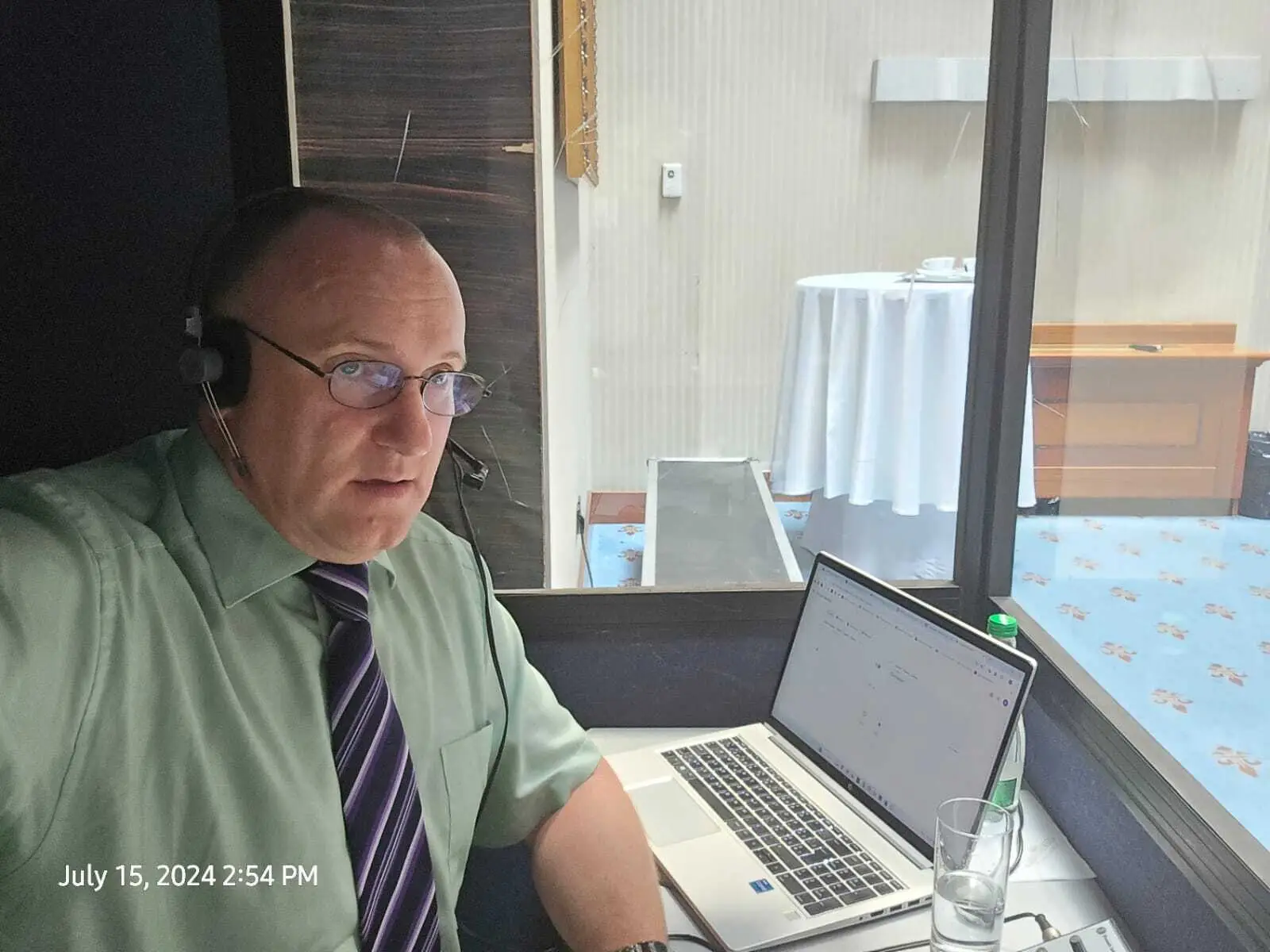
From War Zones to Diplomacy: Stories of a Bosnian Conference Interpreter, Darko Bartula
Arabic Medical Interpreter Spotlight, Dr. Jwan
Interpreter Spotlight: Abhijit Bhandari, Nepali to English Medical Interpreter
Interpreter Spotlight: Ayat Mohamed, Arabic Medical Interpreter
Want to Become a Arabic Interpreter for Boostlingo?
Explore opportunities to join our team of talented Arabic interpreters.
