
Explore

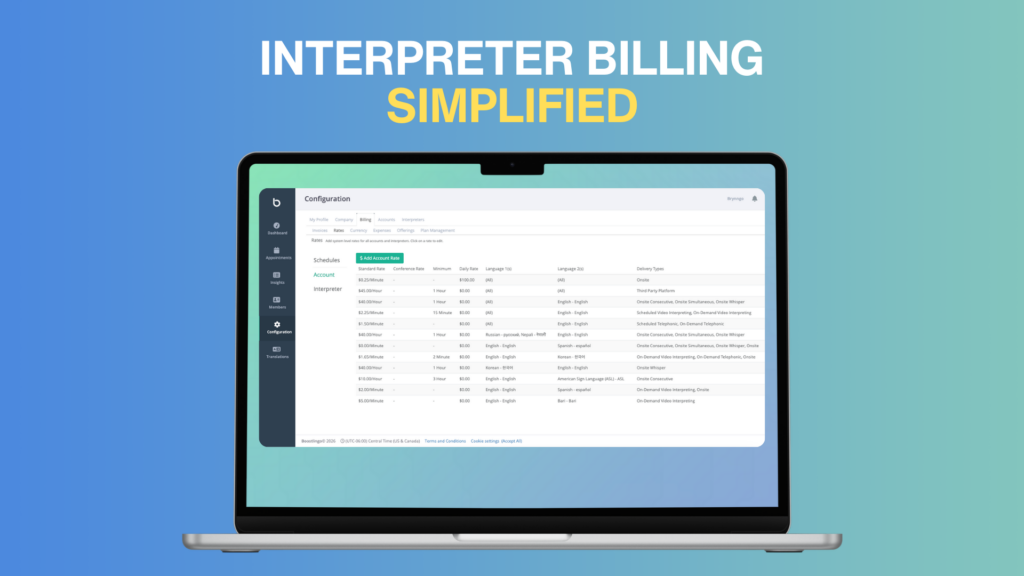
A hospital may handle hundreds of interpreted encounters every week. A court system may coordinate multiple languages across locations. A language service provider (LSP) may manage thousands of remote sessions each month. Yet despite this scale, billing for interpreter services is often managed through disconnected spreadsheets, manual time logs, and fragmented approval workflows.
The result? Delayed reimbursements, compliance concerns, frustrated finance teams, and limited visibility into true interpreting costs.
Why Accurate Interpreter Invoicing Matters
The process of interpreter billing stands in the middle of compliance, finance, and operations.
In healthcare environments, especially, language access is tied to federal civil rights requirements and patient safety standards. This means that interpreting is an essential component of care delivery, not just an optional add-on.
By extension, this makes documentation, reimbursement, and audit readiness matter in healthcare interpreting.
When interpreter payments and invoicing lack consistency, your organization will often encounter:
- Reimbursement delays due to incomplete documentation
- Discrepancies between scheduled and actual session times
- Inconsistent rate application across different departments
- Audit exposure tied to mission session records
Even outside healthcare, messy billing processes create inefficiencies. Courts, government agencies, and enterprise organizations need centralized oversight to ensure that rate structures are applied consistently and that interpreter usage is visible throughout the entire organization.
Ultimately, accurate interpreter invoicing is about control: control over spending, compliance, and operational transparency.
How to Bill for Interpreter Services
There is no universal formula for billing for interpreter services. Policies vary based on industry, payer mix, contractual agreements, and internal financial structures. However, high-performing organizations share common practices.
Regardless of the environment, several operational elements shape how organizations manage billing:
- Documentation Standards. Each interpreted encounter should generate a reliable record of when the session occurred, how long it lasted, which language was provided, which modality was used, and which department or program requested it.
- Session Tracking Systems. As organizations expand remote and on-demand interpreting, automated tracking becomes increasingly important for maintaining consistency.
- Rate Structures. Without standardized rate management, invoicing, and paying, interpreters can quickly become inconsistent across departments or facilities.
- Travel Time and Mileage Policies. For organizations offering on-site services, clear guidelines help prevent disputes, ensure fair compensation, and maintain cost control.
- Reconciliation Processes. As appointment volume grows, spreadsheet-based reconciliation becomes increasingly difficult to sustain, increasing the need for interpreter data to align with approved rate cards, departmental budgets, and financial systems.
At the end of the day, billing for interpreting services is less about a single formula and more about building structured, defensible workflows that align with an organization’s regulatory environment, funding model, and scale.
CMS, Medicare, and Insurance Billing Considerations
Healthcare organizations often ask the following questions:
- Can you bill insurance for interpreter services?
- Can a patient be billed for interpretation services?
- How does CMS billing for interpreter services work under Medicare managed care?
The answer depends on payer contracts, state Medicaid guidance, and specific managed care arrangements. In most cases, interpreter services are considered part of the overall cost of delivering care, particularly when language access is required under federal civil rights law.
That simply means these services are frequently incorporated into broader reimbursement structures rather than billed as separate line items. Billing a patient directly for required language access services may raise compliance concerns.
When evaluating CMS billing for interpreting under Medicare-managed care, organizations should focus on two priorities: understanding how interpreter costs are accounted for within their reimbursement model and maintaining thorough documentation to support audit readiness.
Because policies evolve, healthcare providers should confirm requirements internally with compliance or legal teams.
Note: This section provides operational context, not legal advice.
Common Interpreter Billing and Documentation Mistakes
As your interpreter programs grow, certain billing challenges may appear again and again.
Inconsistent Time Tracking
One of the most common issues organizations will constantly face, inconsistent time tracking, is often caused by on-site appointments being rounded differently than video sessions or interpreters manually logging time without system validation. This makes reconciliation more difficult down the road.
Over time, even small inconsistencies can compound into measurable financial discrepancies, especially if left unchecked for too long.
Disconnected Rate Management
When different facilities or departments negotiate separate rates without centralized oversight, invoices become harder to validate. This fragmentation increases the administrative burden on finance teams and can create tension with interpreter vendors.
Manual Spreadsheet Reconciliation
There’s no doubt that spreadsheets are a staple in every organization’s workflow. But while they do work at low volumes, they don’t often scale effectively. The more appointments an organization manages, the more likely human error becomes.
Missing Approvals or Incomplete Purchase Orders
Missing approvals and incomplete purchase orders not only delay payments, but they also strain vendor relationships. Regardless of the volume your organization handles on a day-to-day basis, these inefficiencies directly translate into operational friction.
What a Standardized Interpreter Invoice Should Include
Whether your organization is receiving invoices from an LSP or managing internal cost allocation, a standardized interpreter invoice should provide complete, consistent data.
At the very least, invoices should clearly document service dates, start and end times, total duration billed, modality, language provided, applicable rates, and the associated department or cost center. Travel charges, cancellation fees, and purchase order references should be explicitly itemized where applicable.
The goal is clarity. When billing for medical interpreter services, finance teams should be able to trace every charge back to a documented appointment record. Clear, structured invoices reduce disputes and support compliance reviews.
The more interpreter volume you manage, the more important invoice standardization becomes.
What a Standardized Interpreter Invoice Should Include
Whether your organization is receiving invoices from an LSP or managing internal cost allocation, a standardized interpreter invoice should provide complete, consistent data.
At the very least, invoices should clearly document service dates, start and end times, total duration billed, modality, language provided, applicable rates, and the associated department or cost center. Travel charges, cancellation fees, and purchase order references should be explicitly itemized where applicable.
The goal is clarity. When billing for medical interpreter services, finance teams should be able to trace every charge back to a documented appointment record. Clear, structured invoices reduce disputes and support compliance reviews.
The more interpreter volume you manage, the more important invoice standardization becomes.
When Manual Invoicing Becomes a Bottleneck
Similar to spreadsheets, manual invoicing is often manageable at smaller scales. But an organization’s growth changes many things.
As healthcare systems expand telehealth offerings and remote interpreting becomes more common, session volume can increase rapidly. Managing invoicing and paying interpreters through email threads, spreadsheets, and disconnected accounting systems limits visibility and slows reconciliation.
Leaders often discover they lack real-time reporting on interpreter utilization, departmental costs, or modality trends. Without centralized data, forecasting becomes guesswork.
This is where electronic billing software for interpreting moves from “nice to have” to “must have”.
How Boostlingo’s Interpretation Management System Simplifies Billing
Boostlingo’s Interpretation Management System centralizes billing for interpreter services within a single, scalable platform.
Automated session tracking captures accurate time data across on-site, video, and phone appointments.
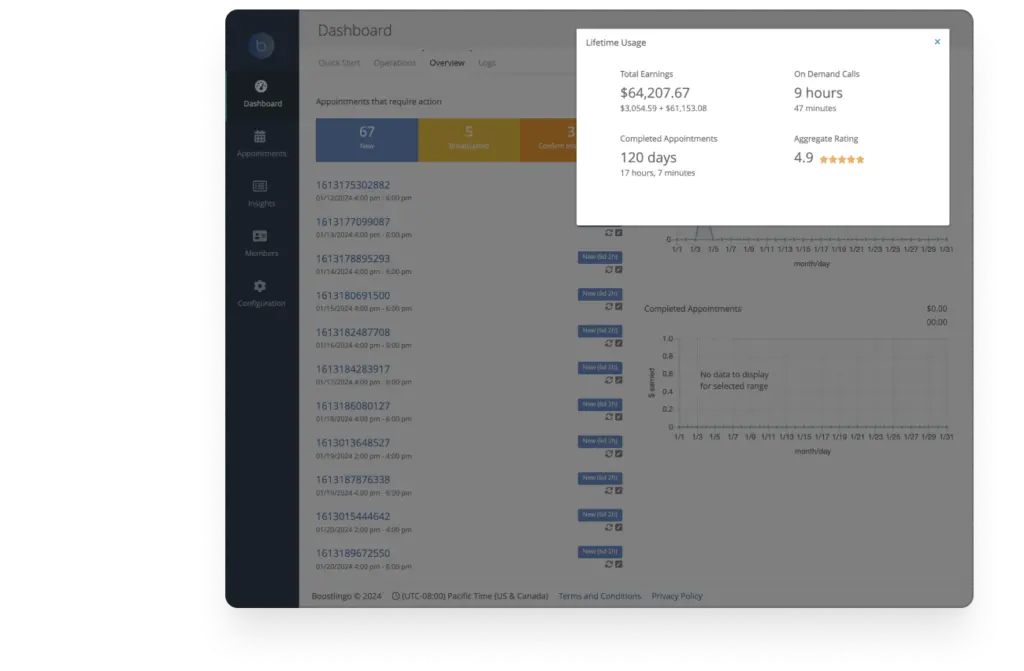
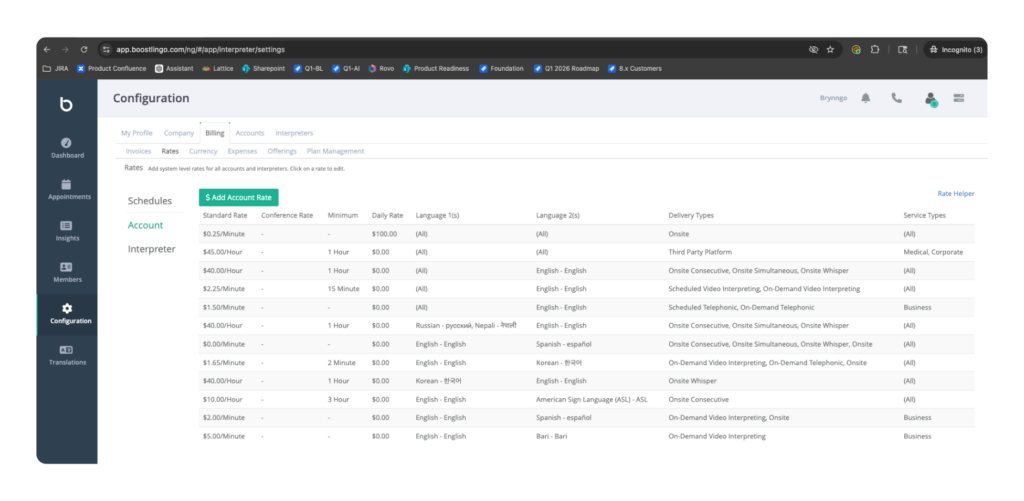
Configurable rate management ensures pricing is applied consistently across departments and facilities.
Integrated approval workflows reduce unauthorized bookings and prevent missing documentation.
For healthcare systems navigating CMS requirements and audit-readiness, centralized documentation strengthens their compliance posture. For finance teams, however, built-in reporting and QuickBooks integration simplify reconciliation and improve visibility into interpreter spend.
Instead of piecing together billing data, chasing down signatures, and manually organizing paperwork, Boostlingo can help organizations gain a unified, paperless view of interpreter invoices and operations, further improving efficiency, transparency, and control.
Build a Smarter, Scalable Approach to Interpreter Billing
Organizations that standardize documentation, clarify rate structures, and invest in centralized systems position themselves for long-term success. To see how Boostlingo can help streamline billing and interpreter management across your organization, book a demo with our team.

![A laptop streaming a live keynote event, showing a speaker on stage with large real-time captions displayed across the bottom of the screen that read: “[Moderator] Welcome to our keynote event. Captioners convert spoken content into clear text in real time.”](https://boostlingo.com/wp-content/uploads/2026/03/BLOG-Featured-Image-2.png)
